Water Metro to rooting out rot at Kolkata port: It’s raining development in Suvendu Adhikari’s West Bengal
Suvendhu Adhikari held a meeting with Union Minister for Ports, Shipping and Waterways Sarbananda Sonowal on Thursday.
The specially designed Swachha App will be introduced in the state from May 30 in 10 civic bodies as a pilot project, Agnimitra Paul said.




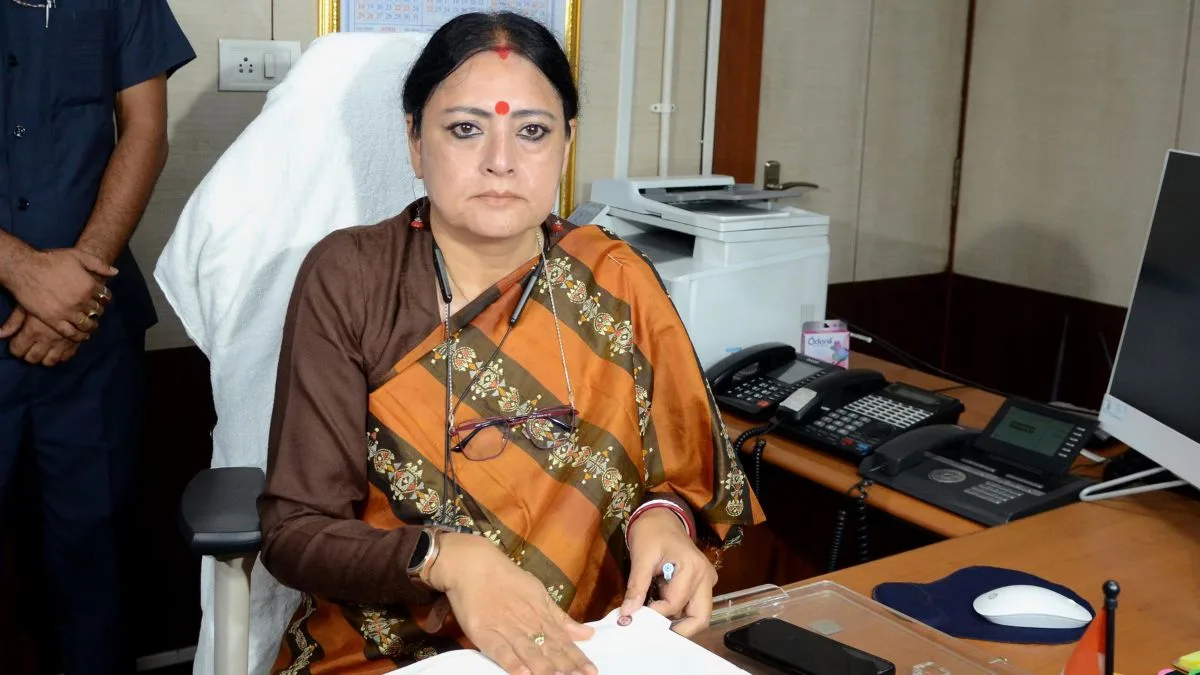
Image: IANS
West Bengal Minister Agnimitra Paul has announced a three-month awareness campaign, after which civic bodies will impose penalties on households and individuals caught littering or spitting on streets, starting from September 1.
“We Indians keep clean when they roam outside the country and I have seen those same people throwing cola and empty water bottles, gutka and plastic packets, coconut
shells, spit on the roads etc. Our government will not tolerate such nuisances and will act strongly,” Paul said.
Advertisement
Due to these piles of uncleaned garbage on the roads, the crows and other birds make the area dirty and the rodent populations are also increasing in the urban areas of the state, she highlighted.
Advertisement
In an interview with The Statesman, Agnimitra Paul said that she is giving three months time for the people to become alert, adding that help from institutes, local clubs, NGOs, besides the state government will be taken for the three month awareness campaign.
The specially designed Swachha App will be introduced in the state from May 30 in 10 civic bodies as a pilot project and people can click a picture of the uncleared garbage in front of their houses and send directly to the Swachha App and within two hours the civic body will clean that garbage.
“We are facing a lot of trouble as many councillors and borough chairmans have resigned already after the huge losses of the previous ruling party and providing smooth civic amenities had become a challenge. So, initially we have identified 10 civic bodies in the state to implement the penalty rule and tomorrow we will announce it
publicly in detail,” Paul added.
She said that two types of dustbins will be provided, including one for wet waste and the other for dry. People will segregate those solid waste and dispose of at the specified dustbins.
“We will set up dustibins on every 100 metres distance throughout the state in urban areas and littering of garbage hither and thither will not be allowed,” she added.
The civic bodies will also erect ‘please don’t litter’ notice boards, she added.
West Bengal generates approximately 13,469 to 13,709 tonnes per day (TPD) of municipal solid waste (MSW) from its 128 urban local bodies.
Based on 13,500 TPD, this equals roughly 4.9 million tonnes annually. Only a fraction is processed, with significant challenges in treatment reported as of 2026. To reduce these growing northbound mountainous heaps of garbage, the state needs to install processing units to turn the entire waste into wealth.
Incidentally it was in September 2022, the National Green Tribunal (NGT) imposed a massive penalty of ₹3,500 crore on the West Bengal government for failing to manage solid and liquid waste, causing continuous environmental damage. The fine was ordered to be deposited into a ring-fenced account for restoration projects, with a focus on narrowing the gap between waste generation and treatment.
Two of the five registered municipal solid waste dumping grounds of AMC are located on both sides of the NH-19 in Bokbandhi of Asansol and the other three are located in Raniganj, Jamuria and Kulti.
Combined these five have a legacy waste stockpile of a mammoth 11.133 million tonnes (approximately).
With a population of almost 1.4 million, Asansol Municipal Corporation daily produces 694 tonnes of solid waste from its 106 wards. All these wastes contribute to climate change from prolonged emission of methane gas, which is 30 percent more harmful than CO2, according to the UN.
For the scavenging birds and the stray dogs, the 4.76 square meter and 488.31 square meter areas of the landfills in Bokbandhi are the treasure trove of the trash, but the mountains of noxious garbage are plaguing the local residents.
Key Data Points for West Bengal Solid Waste
Daily Generation: Approx. 13,469–13,709 TPD (urban).
Collection Efficiency: Over 97% of generated waste is collected.
Processing Rate: Very low, with reports indicating 8% to 10% treatment efficiency, posing significant environmental challenges.
Major Urban Contributors: Kolkata, Asansol and Howrah are the major generators.
Waste Composition: Includes significant amounts of organic waste and increasing non-biodegradable, plastic, and e-waste.
Advertisement